
 QIP Supports Behavioral Health System of Baltimore in Developing Opioid Use Disorder Toolkit
Each project QIP works on is important, but sometimes we get the opportunity to work on something that directly benefits the communities we live in. That was the case when QIP had the opportunity to work closely with the Behavioral Health System of Baltimore on a comprehensive and accessible Program Implementation Toolkit for Opioid Use Disorder Medical Patient Engagement, Enrollment in Treatment and Transitional Supports (OUD MEETS). This toolkit provided information and best practices for organizations interested in developing their own OUD Meets programs, including recommendations for overcoming administrative and logistical barriers to effective opioid use disorder treatment engagement and connecting patients with effective care before their discharge from the acute hospital.
QIP’s editorial team quickly moved the document from a draft to the final phase, performing a meticulous text and formatting edit to ensure accuracy and accessibility. Complex health topics aren’t always easily understood by the general public, but our team’s expertise in plain language principles helped simplify complex medical and treatment-related terminology so that the toolkit would be informative and approachable for all users, including healthcare professionals, policymakers, and community members.
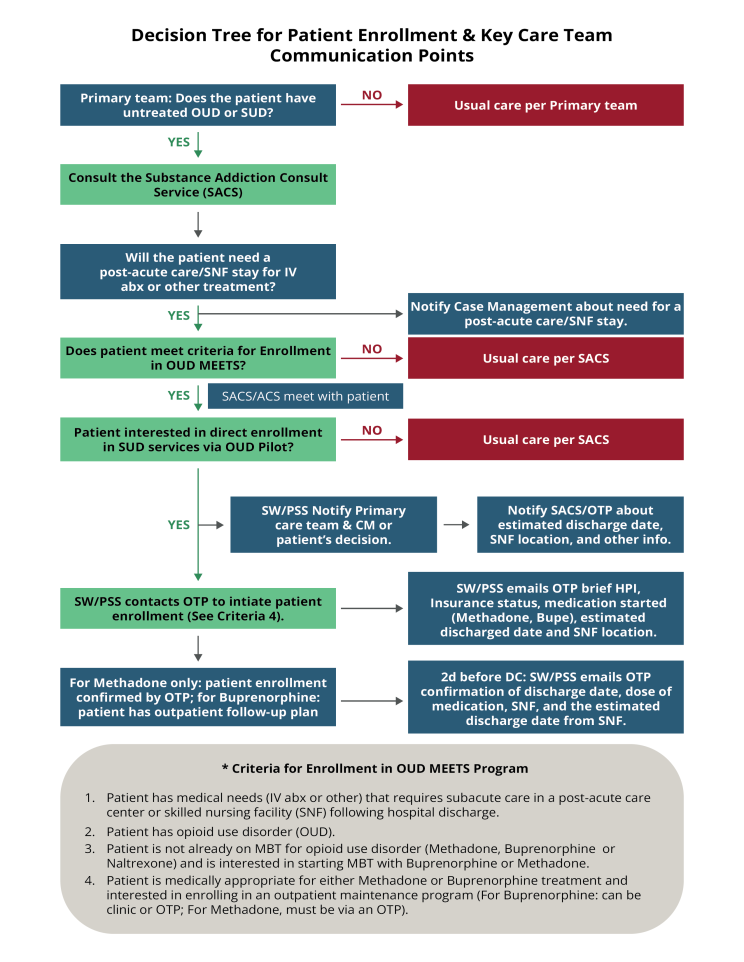
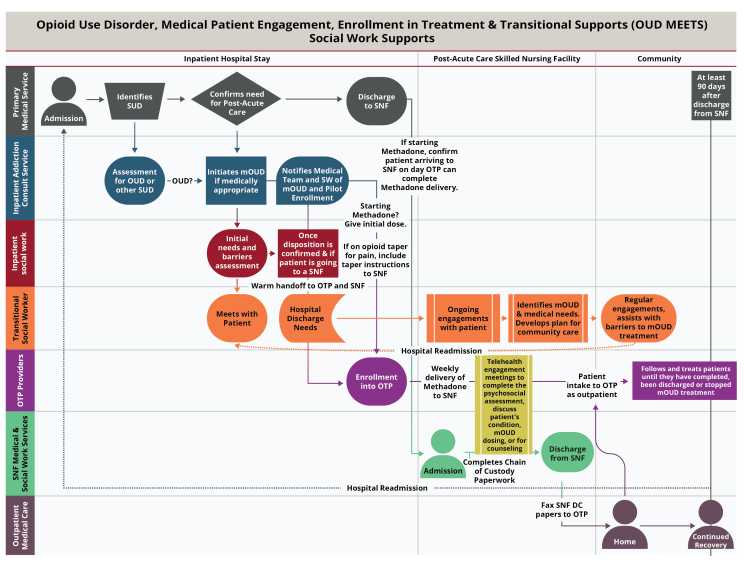
QIP’s graphic designers were also key in transforming the document’s complex data and concepts into visually engaging and accessible graphics. The team worked with the Behavioral Health System of Baltimore to create sample workflow charts and decision trees, illustrating key processes in the OUD MEETS program that followed established branding and style guides. QIP also ensured that the final document was 508 compliant: the team applied rigorous color contrast tests and added alternative text for images to support screen readers, making the document fully accessible to individuals with visual impairments.
QIP’s collaboration with the Behavioral Health System of Baltimore resulted in a product that not only provided valuable insights into the OUD MEETS program but also ensured its accessibility and clarity for all audiences. These efforts helped improve the effectiveness of communication and support for patients with opioid use disorder, particularly in post-acute care settings.